
Cirrhosis of the liver represents a late stage of scarring, caused by long-term damage of the liver. There are 4 stages of fibrosis (liver scarring); cirrhosis is the more advanced stage (stage 4) of fibrosis, where scarring is irreversible.
In cirrhosis, healthy tissue is replaced by scar tissue, that can ultimately result in vital functions to impair. It often progresses silently until complications arise. Early diagnosis is crucial to slow progression, prevent complications, such as bleeding and fluid build-up, and overall improve outcomes.
At Leaders in Liver Health, our hepatologists specialise in early detection, precise staging, and personalised management to help you live well with cirrhosis.
Liver cirrhosis prognosis and life expectancy improve significantly with early specialist care.
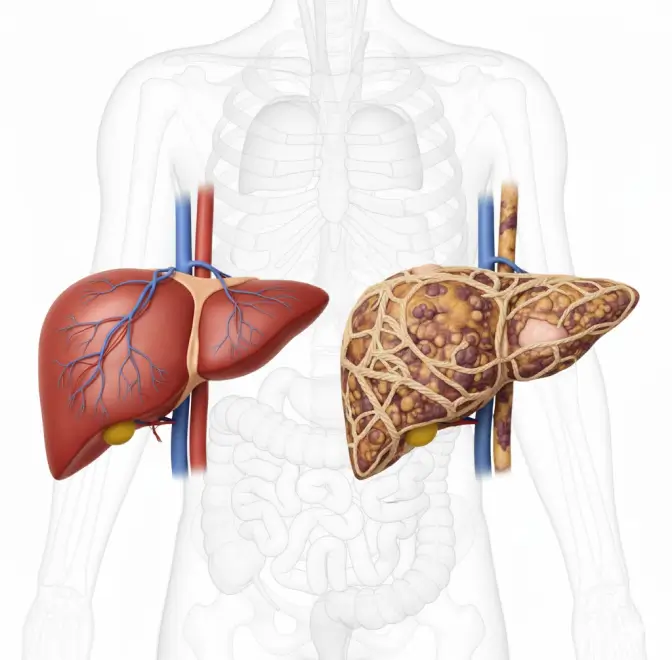
Cirrhosis is the end-stage scarring from chronic liver diseases, caused by prolonged inflammation and injury. It is divided into
Liver cirrhosis prognosis depends on stage, liver function, cause (alcohol, viral hepatitis, fatty liver/MASLD), age, and lifestyle. How long do you live with cirrhosis? Many people living with compensated disease live 10+ years with good management; decompensation of liver cirrhosis can shorten this. Early specialist care and control of the risk factors greatly improve liver disease life expectancy and quality of life.
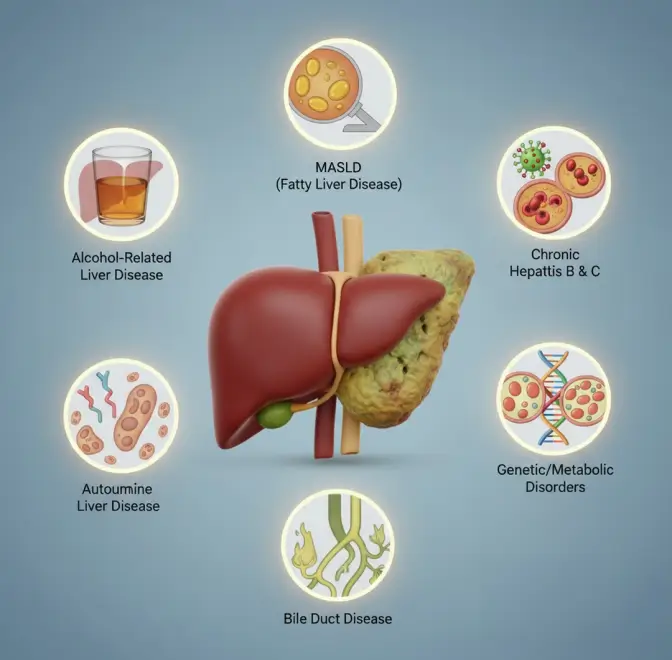
Liver cirrhosis is caused by repeated or ongoing injury to liver cells over years. The liver is an organ that can recover and repair itself. The more severe and long-standing the damage, however, the more difficult it becomes for the liver to self-repair.
Excessive alcohol consumption and viral hepatitis (infections) are the leading causes of liver cirrhosis in many regions, including the UK. Addressing the underlying cause early through abstinence, antiviral therapy, or lifestyle changes can halt further damage and, in early stages, allow partial improvement.
Liver cirrhosis diagnosis combines your history, examination, and tests to assess scarring, liver function, and complications.
Common diagnostic approaches include:
Ongoing monitoring tracks progression, spots complications early (e.g., varices, ascites, liver cancer), and guides adjustments to care. Regular follow-up with a specialist includes screening for hepatocellular carcinoma in higher-risk cases.
Liver function tests and imaging help stage the disease accurately and ensure treatment evolves with your condition.
Liver cirrhosis symptoms depend on the stage and vary widely. In early compensated cirrhosis, many people feel completely normal.
Regular liver function tests and monitoring are crucial they can detect progression before major symptoms develop, allowing timely intervention to manage complications effectively.
Cirrhosis treatment has no single cure but focuses on controlling the cause, slowing progression, and managing complications. Care is highly personalised.
Liver Disease Management also includes screening for cancer and vaccinations, where indicated.
Can cirrhosis be reversed? While advanced cirrhosis with extensive scarring cannot be completely reversed the scar tissue is permanent earlier-stage scarring (fibrosis) can often improve significantly or regress with dedicated management.
Recent research highlights promising advances, particularly in metabolic-related disease (MASLD/MASH), where new therapies have shown evidence of fibrosis regression and, in some trials, cirrhosis improvement. For alcohol-related cases, complete abstinence can lead to stabilisation or recompensation.
Key steps to support improvement or halt progression:
Liver regeneration is possible in early stages; managing liver damage early offers the best chance to stabilise function and prevent worsening. Specialist guidance is essential.

Liver transplant is considered for end-stage cirrhosis when other treatments are insufficient and complications become unmanageable, and potentially life-threatening.
At Leaders in Liver Health, we tailor plans, monitor closely, and refer seamlessly to transplant centres when appropriate.
Liver Disease Management also includes screening for cancer and vaccinations, where indicated.
Liver disease life expectancy improve markedly with early detection, specialist care, and adherence. Patients with compensated cirrhosis generally have better life expectancy than those with decompensated cirrhosis.
Our dedicated liver specialists UK team brings extensive expertise in all stages of liver disease. We offer
Our liver specialists provide personalised care for all stages of liver disease, with a focus on early diagnosis, complication prevention, and seamless access to advanced treatments when required.
Our consultants body includes:
Your journey to better health starts here — simple, guided, and stress-free.
Schedule your appointment online or by phone at a time that suits you best.
Our specialists perform accurate tests and provide clear reports quickly.
Discuss your results with your doctor and start a personalised treatment plan.
It varies widely. Compensated cirrhosis often allows 10+ years of good quality life with proper management; decompensated cases shorten this, but transplant or complication control can extend survival significantly.
Cirrhosis cannot be fully reversed, but function of your liver can be preserved. In addition, in patients with decompensated disease, cirrhosis can become compensated with improvement in metabolic or alcohol-related factors, lifestyle changes and cause-directed treatment and.
Jaundice, abdominal/leg swelling (fluid retention), confusion (encephalopathy), easy bruising/bleeding these signal decompensation and need urgent specialist attention. Often, people with advanced cirrhosis may feel well, thus early specialised assessment with blood tests and imaging is recommended
When the liver fails irreversibly, complications are unmanageable, and other treatments fail typically in end-stage disease.
Yes. Cirrhosis increases the risk of liver cancer, so ultrasound and blood tests every 6 months are standard.
No. Even small amounts accelerate liver damage once cirrhosis is present.
EXCELLENTTrustindex verifies that the original source of the review is Google. Great consultant! I found Professor Kennedy to be very professional with a friendly manner. He really listened to all of my concerns. Would highly recommend him.Posted onTrustindex verifies that the original source of the review is Google. I had a really great experience at Leaders in Liver Health. From the moment I arrived, the team was friendly, professional, and made me feel very comfortable. My consultation was thorough and easy to understand — everything was clearly explained and I had all of my questions answered. I also had my FibroScan done during the same visit, which was very convenient and helpful. It gave me valuable information about my liver health right away, and I appreciated how smoothly the whole process went. Overall, I felt very well cared for and confident that I was in good hands. I highly recommend Leaders in Liver Health to anyone looking for expert, compassionate liver care.Posted onTrustindex verifies that the original source of the review is Google. Dr. Patrick Kennedy is an extraordinary liver specialist. He has cared for my dad for over 15 years, through every stage of his chronic cirrhosis and hepatitis B. Over the years, he has quite literally saved my dad’s life more than once with right diagnosis and recommendations. His medical expertise is exceptional, but what makes him truly special is his compassion, dedication, and consistency. Dr. Kennedy has always been there for my dad; patient, reassuring, and deeply committed to his wellbeing. He takes the time to explain everything clearly, makes thoughtful decisions, and genuinely cares about his patients as people, not just cases. We are profoundly grateful to have him as my dad’s doctor. I can say with full confidence that his care has given us many more years together as a family.Posted onTrustindex verifies that the original source of the review is Google. Professor Kennedy has been exemplary in my care so far. He has always given me due time,an exceptionally attentive approach and indulged by extensive questions. I wouldn’t hesitate to recommend him.His flexibility to suit my busy diary has been great.Posted onTrustindex verifies that the original source of the review is Google. I had a very positive experience with Dr.Kallis.I appreciated how he managed to be both professional and kind.He took the time to clearly explain the diagnostic process and the potential outcomes and then to walk me through the tests results and to answer my questions.Posted onTrustindex verifies that the original source of the review is Google. If you want a methodical , considered approach to your medical issue,with an engaged and empathetic bed side manner Professor Kennedy is the man . I can’t thank him enough for his intelligent, thoughtful approach in resolving my liver issue . A heart felt thank you and wholehearted recommendation ! W . FisherPosted onTrustindex verifies that the original source of the review is Google. Professor Kennedy always explains why procedures are required and how they will be undertaken.He has been encouraging and supportive of me having to make lifestyle changes to help with my treatment.Appointments are always very prompt.Posted onTrustindex verifies that the original source of the review is Google. I recently visited Leaders in Liver Health for a liver scan and consultation. They have been truly outstanding from start to finish. Thank you very much for everything!Posted onTrustindex verifies that the original source of the review is Google. I have been on a journey with Pro Patrick Kennedy for around 18 months where milestones have been carefully planned and achieved, we have worked very closely together with a common and meaningful goal to resolve my medical issues. Patrick has a very calm, direct manor no stone is left unturned and the entire process continues to be outstanding. medical issues are never a pleasant experience and all we can really ask for is for someone to guide us, take care of us and ultimately find a positive outcome I am delighted to say Patrick is a 10 out of 10 !!Posted onTrustindex verifies that the original source of the review is Google. Brilliant service. My doctor listened very carefully and I felt included in the management of my condition. Thank you!Verified by TrustindexTrustindex verified badge is the Universal Symbol of Trust. Only the greatest companies can get the verified badge who has a review score above 4.5, based on customer reviews over the past 12 months. Read more
If you’ve been diagnosed with cirrhosis, have abnormal liver results, or risk factors like alcohol use, viral hepatitis, or metabolic risk factors, early specialist input can transform your outlook.
Don’t delay book a consultation with a liver specialist at Leaders in Liver Health for expert assessment, clear answers, and a tailored plan. Contact us today for an appointment or online booking at our liver clinic UK.
WhatsApp us
