
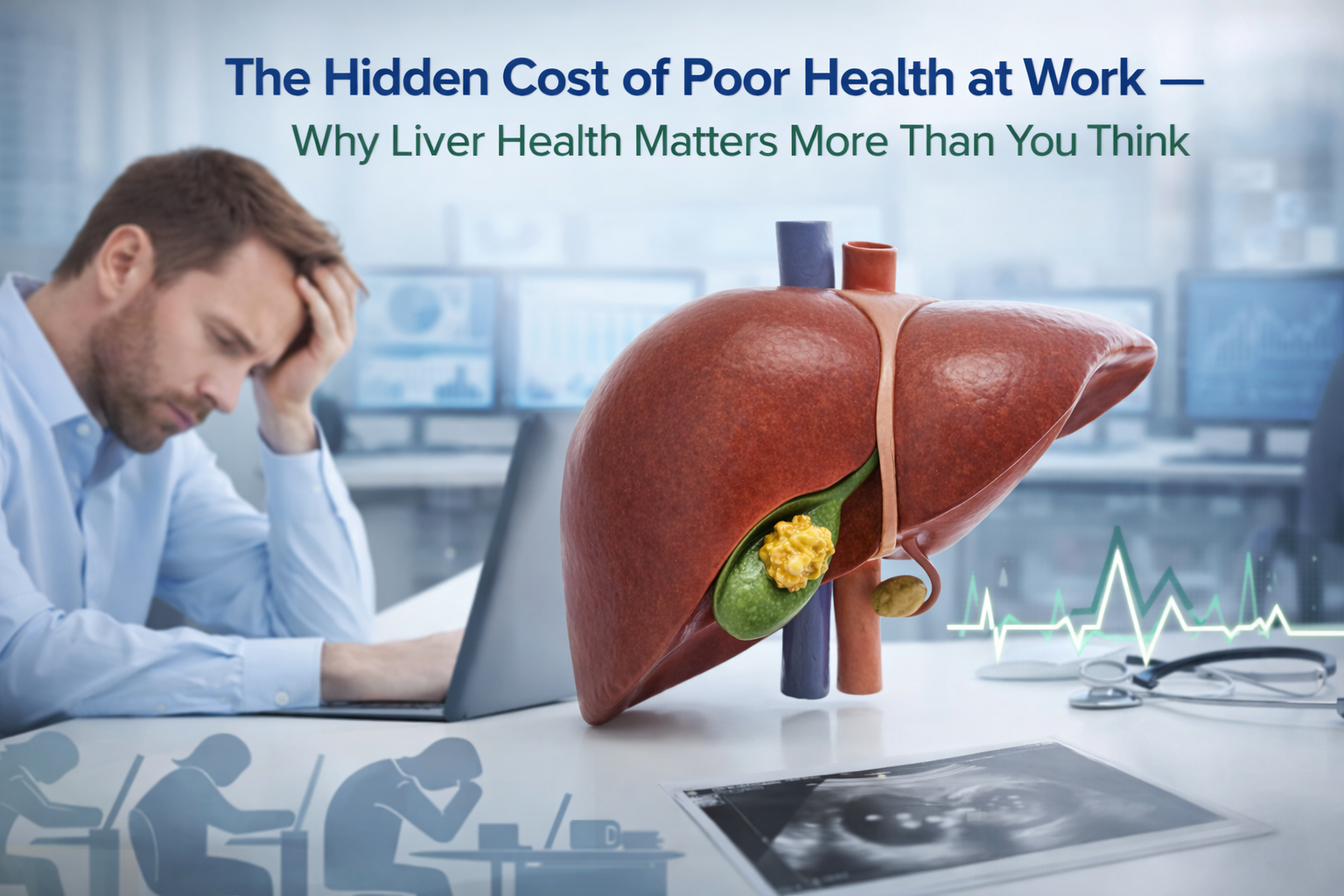
Across the UK and globally, employers are facing a growing challenge: rising sickness absence and reduced productivity linked to chronic health conditions. At the same time, employees are experiencing increasing levels of fatigue, burnout, and long-term health problems that affect both professional and personal life.
While many workplace wellbeing initiatives focus on mental health, cardiovascular risk, or musculoskeletal problems, one vital area is often overlooked liver health.
Yet the liver plays a central role in energy levels, metabolism, immunity, and overall physical wellbeing. When liver health declines, the effects can be subtle at first, but they can significantly impact day-to-day functioning and long-term health outcomes.
Supporting liver health is therefore not only beneficial for individuals it is also an important but under-recognised component of workforce wellbeing.
Liver disease is no longer rare or confined to specialist settings. It is one of the fastest-rising causes of premature ill health in the UK, and much of it affects people of working age.
Common causes include:
Many of these conditions develop silently over years, often without symptoms until more advanced stages. During this time, however, people may experience:
These symptoms can affect productivity, attendance, and overall quality of life long before a formal diagnosis is made.
Poor health in the workforce carries a dual burden:
For employers
For employees
Crucially, much liver disease is preventable or reversible when identified early.
This is where proactive health assessment becomes valuable.
Early Help & Checkup
Concerned about your liver health?
If you are experiencing fatigue, abdominal discomfort, or any of the early warning signs of liver disease — don’t wait.
Book your liver health checkup now
Prevent long-term damage before it’s too late.
Modern liver assessment is straightforward, non-invasive, and highly informative.
A structured liver health check may include:
These tests can identify:
Early detection allows targeted intervention often simple lifestyle adjustments, risk-factor control, or monitoring long before serious disease develops.
For individuals, understanding liver health can help:
For organisations, promoting liver health awareness and screening can contribute to:
Workplace health strategies that include metabolic and liver risk assessment are increasingly recognised as part of comprehensive preventative care.
The liver has remarkable regenerative capacity. In many cases, early liver disease can stabilise or even reverse with appropriate intervention.
Key protective measures include:
Many people simply benefit from knowing their baseline liver health status.
At Liver Care London, we provide consultant-led, evidence-based liver health assessment tailored to individual risk profiles. Our aim is early detection, personalised guidance, and long-term prevention.
If you would like to understand your liver health, or explore workplace liver wellbeing initiatives, our team would be pleased to help.
WhatsApp us
Fill out the form below to schedule a consultation with our liver health specialists. Our team will review your information and contact you within 24 hours to arrange an in-person or virtual consultation. This helps us understand your concerns and offer the best personalized care for your liver health.