
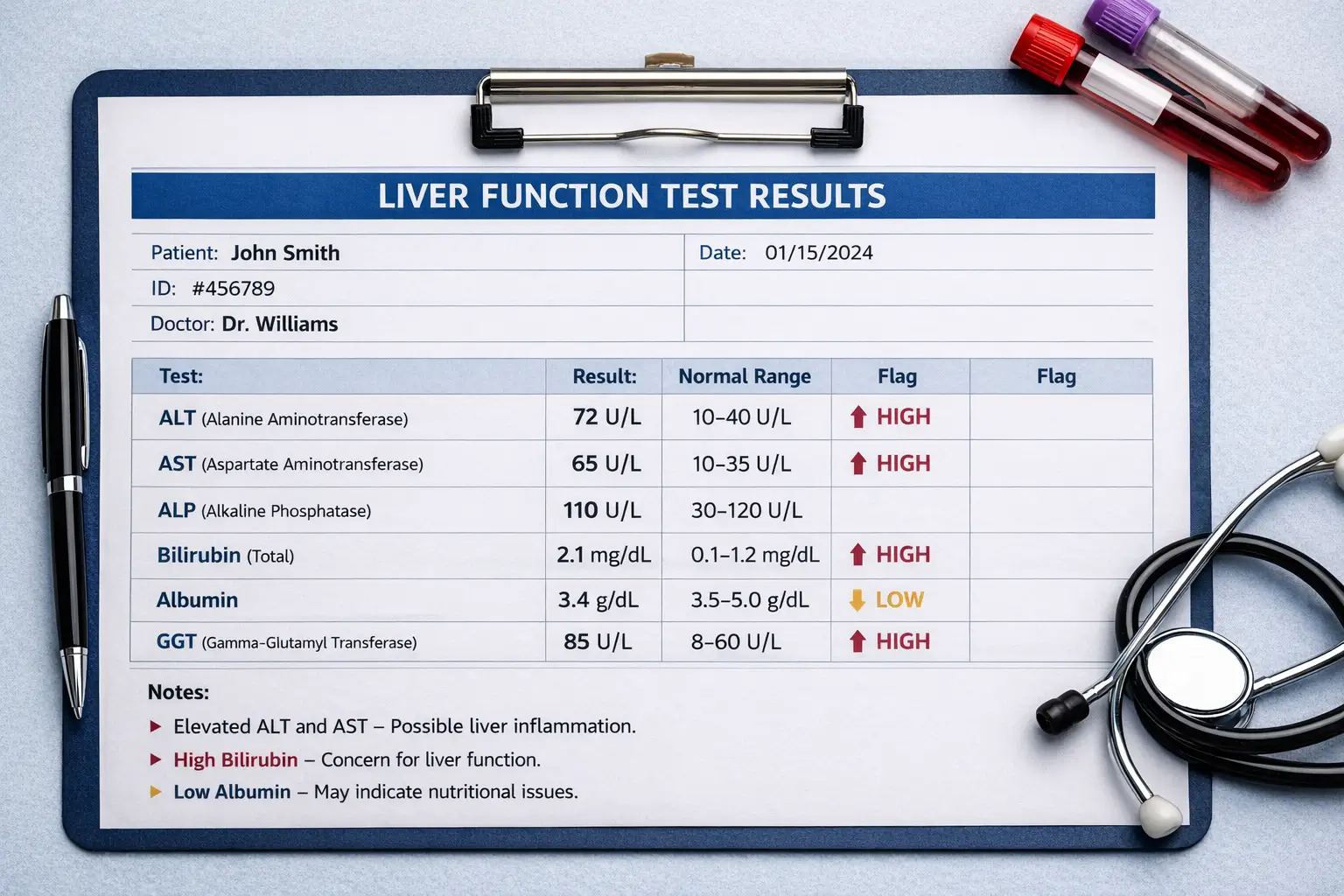
The liver works silently in the background on a daily basis, carrying out essential functions such as supporting digestion, toxin processing, energy storage, and maintaining balance within the body. Clinicians often request Liver Function Tests (LFTs) to assess liver health. These blood tests measure key enzymes and proteins, which can provide useful indicators of liver injury or inflammation and help identify potential issues at an early stage.
Although abnormal results do not always indicate a specific liver disease, they suggest that further assessment may be needed. By understanding the implications of these tests, patients can take proactive steps to protect their liver and support long-term health.
LFTs are laboratory blood tests used to assess liver health. They can identify signs of inflammation or damage and help detect abnormalities in liver enzymes and proteins. These tests are commonly used in the evaluation of conditions such as fatty liver disease, viral hepatitis, and liver-related effects of medications.
They also provide information about the liver’s ability to produce proteins and perform its key metabolic and detoxification functions. The ability to detect changes in enzyme or protein levels at an early stage enables clinicians to investigate further, establish a diagnosis, and take appropriate management steps.
Doctors request LFTs to help identify possible liver-related conditions, monitor existing liver disease, assess response to treatment, and detect potential complications, including those related to cirrhosis. These tests support early recognition of abnormalities, help guide clinical decisions, and reduce the risk of further liver injury, including that related to medications.
They can also assist in identifying previously undiagnosed conditions, such as viral hepatitis, fatty liver disease, or subtle liver injury, by detecting small changes in biochemical markers. Regular testing can provide clinicians with a clearer understanding of liver health over time and allow timely intervention where needed to help prevent further complications.
Everyone’s liver health risks are different. Our specialists can assess your individual risk factors and create a tailored prevention strategy that fits your lifestyle.
Get expert guidance on protecting your liver health.
LFTs measure a range of biomarkers that help assess liver health. These indicators provide clinicians with useful information about possible liver injury, inflammation, or dysfunction, and can highlight areas that may require further assessment. Evaluating these components helps identify abnormalities at an early stage and supports tailored management where needed.
ALT (Alanine Aminotransferase)
ALT (Alanine Aminotransferase) is an enzyme (protein) primarily found in liver cells. When liver cells are damaged or inflamed, ALT is released into the bloodstream and its levels increase. Elevated ALT is commonly seen in conditions affecting the liver, including fatty liver disease and hepatitis, and may indicate early or potentially reversible liver injury.
AST (Aspartate Aminotransferase)
AST is another enzyme found in the liver, but also in muscles and other tissues. Levels can rise in both liver and non-liver conditions. When interpreted alongside ALT, AST can provide additional information about the pattern and possible cause of liver injury.
Alkaline Phosphatase (ALP)
ALP is an enzyme related to the bile ducts. Elevated alkaline phosphatase levels may suggest obstruction of bile flow or conditions affecting the bile ducts, such as gallstones or certain liver diseases. It can also be raised in non-liver conditions, including bone disorders.
Bilirubin
Bilirubin is a substance produced from the breakdown of red blood cells and processed by the liver. Elevated levels may lead to jaundice and can indicate liver dysfunction, bile duct obstruction, or increased breakdown of red blood cells.
Albumin and Total Protein
Albumin and total protein levels reflect the liver’s ability to produce essential proteins. Low levels may be seen in chronic liver disease, but can also occur in other conditions such as poor nutrition, inflammation, or kidney disease.
Elevated liver enzymes are often a sign of liver inflammation or injury. These increases may reflect liver stress related to inflammation, infection, medications, or lifestyle factors. Understanding the underlying cause of enzyme elevation can help guide appropriate steps to protect liver health and reduce the risk of complications.
Liver Inflammation
Raised ALT or AST levels are commonly seen when the liver is inflamed due to infections, medications, toxins, or autoimmune conditions. This inflammation reflects injury to liver cells, leading to the release of enzymes into the bloodstream. Early identification of liver inflammation allows for timely assessment and management to help prevent longer-term complications.
Fatty Liver Disease
Elevated liver enzymes are frequently associated with fatty liver disease. This condition develops when excess fat accumulates in liver cells, often in the context of obesity, type 2 diabetes, elevated cholesterol, or metabolic risk factors. Early diagnosis and appropriate lifestyle changes can improve liver health and reduce the risk of disease progression.
Viral Hepatitis
Liver enzyme levels may increase in viral hepatitis, including hepatitis B and C, reflecting active liver inflammation. These infections affect liver cells and, if left untreated, can lead to fibrosis (scarring of the liver) or cirrhosis over time. Early detection and appropriate hepatitis treatment are important to support long-term liver health.
Everyone’s liver health risks are different. Our specialists can assess your individual risk factors and create a tailored prevention strategy that fits your lifestyle.
Get expert guidance on protecting your liver health.
Low levels of certain biomarkers can also be associated with underlying health conditions.
Nutritional Deficiencies
Low protein levels may reflect inadequate nutritional intake or poor absorption. These changes can be related to poor dietary intake, gastrointestinal conditions, or other medical causes. Identifying and addressing these factors can help support overall health and maintain normal liver function.
Chronic Liver Disease
Chronic liver disease refers to long-term conditions that can progressively impair liver function over time. As liver function declines, the production of proteins -particularly albumin- may decrease, leading to lower levels on blood tests. This can be seen in advanced liver disease, including cirrhosis. Early recognition and appropriate management are important to help slow disease progression and reduce complications.
It is essential to understand that there are some abnormal results which require immediate attention.
Warning Signs with Abnormal Results.
If blood tests show significantly elevated liver enzymes alongside symptoms such as jaundice or swelling (oedema) of the legs or stomach, this may indicate more significant liver injury and should prompt further medical assessment.
When to Consult a Liver Specialist.
Patients are advised to seek specialist input in case of abnormal blood results or if symptoms are suggestive of liver disease. Ongoing abnormalities or clinical concerns may require further investigation and tailored management. Regular assessment of liver health can help identify issues early and reduce the risk of complications.
In most cases, LFTs need to be supplemented with other special tests.
Ultrasound and Imaging
Ultrasound and other imaging modalities provide detailed information about the liver’s size, shape, and structure. These tests are useful in identifying conditions such as fatty liver, cysts, liver lesions, gallstones, or bile duct obstruction. Imaging is non-invasive, quick, and is often used as an initial step in assessing structural abnormalities of the liver.
Fibroscan
FibroScan is a non-invasive test used to assess liver stiffness, which can indicate fibrosis (scarring). It is similar to an ultrasound and is generally painless. This test is particularly useful for evaluating the degree of liver fibrosis (scarring) and monitoring disease progression (or response to treatment and lifestyle interventions), helping to identify patients at risk of advanced liver disease without the need for invasive procedures.
Liver Biopsy
A liver biopsy may be recommended when more detailed information about liver injury is required. The procedure involves taking a small sample of liver tissue for microscopic analysis. Although used selectively, it can provide precise information about the nature and severity of liver disease, support diagnosis, and help guide treatment decisions when non-invasive tests are inconclusive.
Liver health can often be supported through appropriate lifestyle measures, including:
Diet and Lifestyle Changes
A balanced diet rich in fruits, vegetables, and whole grains, along with reducing intake of processed, high-fat, or high-sugar foods, can support liver health. Regular physical activity also helps improve metabolic health, which is closely linked to liver function.
Avoiding Alcohol and Toxins
Alcohol can have a significant impact on the liver. Reducing or avoiding alcohol intake may help improve liver enzyme levels and reduce the risk of further liver injury.
Managing Underlying Conditions
Conditions such as diabetes, high cholesterol, and obesity can contribute to liver disease. Effective management of these conditions can support liver health and may lead to improvement in liver test results.
Your doctor will interpret your results and advise whether any values fall outside the expected range.
These proteins may increase due to liver inflammation or injury. Common causes include fatty liver disease, viral hepatitis, medications, alcohol use, or other conditions
In some cases, liver enzyme levels can improve with appropriate lifestyle changes and treatment of the underlying cause. This depends on the nature and stage of the condition.
The frequency of testing depends on the clinical context. In some individuals, periodic testing may be sufficient, while those with known liver conditions may require more regular monitoring.
Not always. Mild or temporary abnormalities can occur due to short-term factors such as medications, infections, or recent illness. However, persistent or significant changes should be assessed further.
Understanding your Liver Function Tests (LFTs) can help you take an active role in your health and make informed decisions. These tests can provide early indications of liver inflammation, fatty liver disease, infections, or ongoing liver injury, allowing timely assessment and management before complications develop.
For specialist advice and personalised care, Leaders in Liver Health offers expert-led assessment and tailored treatment approaches. With a focus on early detection, advanced diagnostics, and patient-centred care, patients can access high-quality support for a wide range of liver conditions.
Regular monitoring, a healthy lifestyle, and appropriate specialist input can help manage liver conditions effectively and support long-term liver health.
Prevention is the best medicine, but knowing where to start can be challenging. Our liver specialists provide evidence-based prevention advice tailored to your individual circumstances.
Take control of your liver health with expert guidance.
WhatsApp us
Fill out the form below to schedule a consultation with our liver health specialists. Our team will review your information and contact you within 24 hours to arrange an in-person or virtual consultation. This helps us understand your concerns and offer the best personalized care for your liver health.